
The Psychology of Live Interaction: Why It Feels So Real
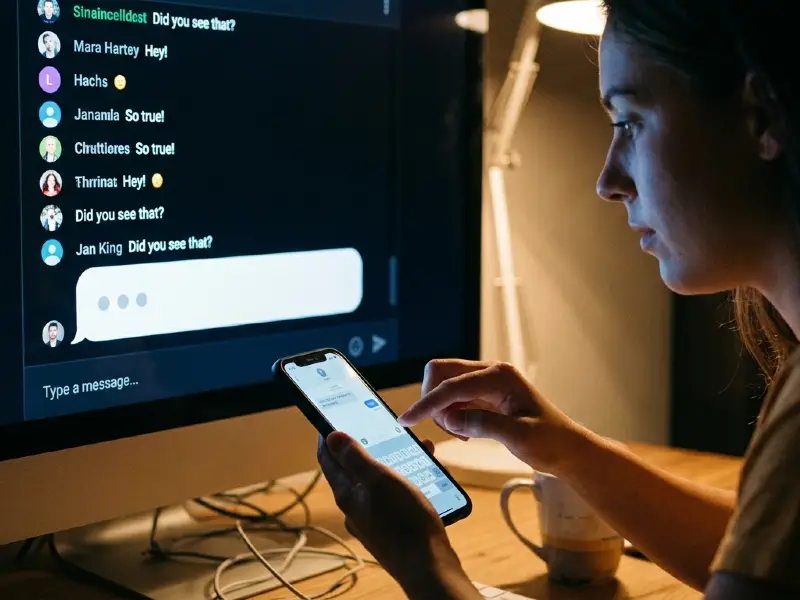
The typing bubble appears. Stops. Appears again.
You wait.
And somehow… that tiny flicker of someone is there hits harder than a perfectly written paragraph ever could.
The Illusion That Is Not an Illusion
Here is the uncomfortable truth: live interaction does not just feel real. Your brain treats it as real.
Not metaphorically. Neurologically.
When something happens in real time, your mind flips into a completely different mode. There is unpredictability. There is risk. There is the possibility of being seen right now, not later, not edited, not filtered into something safer.
That changes everything.
Recorded content is controlled. Finished. Dead, in a way.
Live interaction? It breathes. It can go wrong.
And that is exactly why it works.
You Are Not Watching. You Are Participating.
I realized this the hard way during a random late night livestream.
Nothing dramatic. Just someone talking, reading comments, reacting in real time. I was not even planning to stay. But then they responded to a message, someone else’s message, and suddenly I felt pulled in.
Not entertained. Involved.
I typed something. Nothing clever. Honestly, kind of dumb. Hit send.
And then that weird moment:
Did they see it?
That tension. That anticipation. That micro burst of adrenaline.
It is absurd how powerful that is.
Because now it is not content anymore. It is a situation.
The Brain Hates Delays
Humans are wired for immediacy. Not perfection.
In real world conversations, timing is everything: pauses, interruptions, reactions. Your brain is constantly reading cues and adjusting. That loop is fast. Instant. Alive.
Digital content usually breaks that loop.
But live streaming behavior recreates it.
Responses happen now. Mistakes happen now. Eye contact, even through a screen, feels immediate. Your brain fills in the gaps like it is a real social environment because, as far as it is concerned, it is.
Latency kills connection. Real time connection restores it.
That is the whole game.
Digital Intimacy Is Built on Imperfection
Polished content keeps you at a distance.
Live interaction pulls you closer by doing the opposite.
A stutter. A laugh at the wrong moment. Someone losing their train of thought. Those tiny cracks signal authenticity. Your brain relaxes. Trust goes up.
It is messy. Slightly uncomfortable. And way more intimate.
That is why people stay longer in live environments, even when nothing is happening.
Because something is happening. Continuously.
Attention Feels Personal When It Is Unpredictable
Here is where it gets a little provocative.
Part of what makes live interaction so addictive is not just connection. It is intermittent attention.
You might be noticed. Or ignored. Or suddenly pulled into the spotlight.
That unpredictability is powerful.
It is the same mechanism that keeps people refreshing feeds, checking messages, waiting for replies that may or may not come.
Except in a live setting, it is amplified. Immediate. Public.
And when attention does land on you, even briefly, it feels disproportionately significant.
Like winning something small but strangely meaningful.
The Shift in How We Relate Online
We used to consume the internet.
Now we hover inside it.
Live streaming behavior is part of a bigger shift from passive viewing to active presence. People are not just looking for content anymore. They are looking for moments where they can exist with someone, even if it is through a screen.
Not perfectly. Not permanently.
Just briefly real.
That is where digital intimacy lives now. In the overlap between performance and participation.
So Why Does It Feel So Real?
Because it removes the safety buffer.
There is no rewind. No edit. No second take.
And your brain knows it.
It reacts to live interaction the same way it reacts to someone sitting across from you, watching, waiting, responding.
The medium changed. The wiring did not.
The Part Nobody Says Out Loud
We do not just want connection.
We want uncontrolled connection.
Something that might go somewhere. Or nowhere. Something that can surprise us.
Live environments give you that. Not consistently. Not fairly. But enough to keep you leaning forward.
And maybe that is the real hook.
Not that it feels real.
But that, for a few seconds at a time, it actually is.