
Scoreland: America’s Love Affair With Big Boobs
Big boobs have been part of the American ideal of female beauty for generations. From curvy pin-up girls and Hollywood bombshells to glamour magazines, breast implants, and adult entertainment, America has had a long and sometimes larger-than-life fascination with the female bust.
That fascination eventually found a natural home online, where sites such as Scoreland turned a popular preference into an entire niche. But America’s love affair with big boobs started long before the internet.
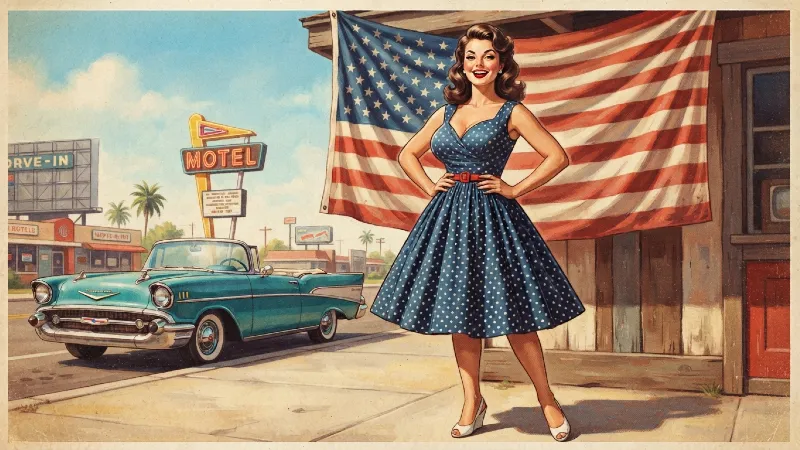
The Pin-Up Era and the Rise of the Curvy Ideal
Long before the internet, the American pin-up helped turn curves into a mainstream symbol of beauty. During the 1940s and 1950s, illustrated calendars, magazine art, advertisements, and photographs often celebrated women with hourglass figures, narrow waists, and fuller busts.
Pin-up images became especially visible during World War II, when soldiers carried photographs and magazine clippings of glamorous women overseas. Back home, the same look appeared in movies, advertising, and popular magazines, helping make the curvy silhouette part of the broader American beauty ideal.
By the 1950s, the pin-up was no longer just a private fantasy. The combination of fitted clothing, dramatic curves, and polished glamour had become a recognizable part of American pop culture.
Hollywood’s Famous Bombshells
Hollywood took the curvy ideal of the pin-up era and turned it into something even bigger: the bombshell. During the 1950s, actresses such as Marilyn Monroe and Jayne Mansfield became famous not only for their movies, but also for glamorous public images that celebrated curves, femininity, and sex appeal.
Mansfield in particular became closely associated with the exaggerated hourglass look, while Monroe helped make the glamorous blonde bombshell one of the most recognizable images in American pop culture. Other stars of the era, including Jane Russell and Mamie Van Doren, reinforced the idea that a fuller figure could be a major part of a woman's star power.
Hollywood did not invent America's fascination with big breasts, but it certainly gave the fascination some very famous faces.
The Sweater Girl Era
One of the more amusing chapters in America's fascination with curves was the rise of the “sweater girl.” The expression became popular in Hollywood during the late 1930s and 1940s, when actresses wearing snug-fitting sweaters attracted attention for a style that emphasized the bust while keeping the woman completely covered.
Actress Lana Turner became one of the best-known early examples after appearing in a tight sweater in the 1937 film They Won’t Forget. Soon, the sweater girl became a recognizable American look, helped along by Hollywood publicity photographs, fashion magazines, and other stars who adopted the style.
It is a good reminder that America's fascination with big boobs did not require revealing clothing. Sometimes, a simple sweater was enough to create a cultural phenomenon.
Did Playboy Create America’s Big-Boob Obsession?
It is tempting to blame Playboy for America’s fascination with large breasts, but the preference was already firmly established before the magazine first appeared in 1953. Pin-ups, Hollywood bombshells, and the sweater girl era had already made curves a major part of American popular culture.
What Playboy did was help package that beauty ideal for a huge national audience. Its models, celebrity features, and carefully styled photography gave generations of readers a highly polished version of American glamour, and fuller busts were often part of that image.
So Playboy probably did not create the big-boob obsession as much as amplify and commercialize something that was already there. In many ways, the magazine reflected American tastes while also helping shape them.
When Breast Implants Changed the Look
The next major shift came with breast augmentation. Modern silicone breast implants were introduced in the 1960s, giving women a new way to permanently change the size and shape of their breasts.
At first, cosmetic breast surgery was far less common than it is today, but over the following decades it became increasingly visible in Hollywood, modeling, and adult entertainment. By the 1980s and 1990s, dramatically enhanced busts had become part of a more exaggerated version of American glamour.
That changed the big-boob ideal itself. Large breasts were no longer limited to natural body types; cosmetic surgery made it possible to push the look further, helping create the larger-than-life aesthetic that became especially recognizable in late-20th-century pop culture.
The Bigger-Is-Better 1980s and 1990s
By the 1980s, subtlety was not exactly the defining feature of American pop culture. Hair got bigger, fashion got louder, and the glamorous female ideal often followed the same bigger-is-better philosophy. Glamour models, adult magazines, VHS tapes, fitness culture, and increasingly common cosmetic surgery all helped push exaggerated curves into the spotlight.
The trend became even more visible during the 1990s, and few celebrities represented the era better than Pamela Anderson. Her appearances in Playboy and especially her red swimsuit on Baywatch made the blonde, tanned, large-breasted California bombshell recognizable around the world.
By then, the busty look was everywhere from magazine covers and television to advertising and adult entertainment. The pin-up girl had evolved for a new generation: bigger hair, smaller swimsuits, and often much bigger boobs.
Were American Men Really More Obsessed With Big Breasts?
American pop culture certainly made it look that way, but the reality is more complicated. Men do not share one universal preference, and studies comparing different countries have found that preferred breast size varies considerably across cultures and individuals.
There is some evidence that Americans lean toward larger breasts. One U.S. study found that male participants tended to prefer larger sizes than female participants, while another comparison found that men in American samples preferred larger-than-average breasts more often than men in St. Kitts. Other international research, however, has found medium sizes to be the most popular in several countries.
So the stereotype probably owes at least part of its strength to American media. Decades of Hollywood bombshells, magazines, advertising, television, and adult entertainment repeatedly put busty women in the spotlight, making one particular preference appear much more universal than it really was.
Funny Facts, Myths and Big-Boob Pop Culture
America’s fascination with breasts has produced plenty of its own language and mythology. For decades, the measurements “36-24-36” were treated almost like a formula for the ideal hourglass figure, even though real bodies rarely fit neatly into a set of supposedly perfect numbers.
Bra sizes created another source of confusion. A D cup does not represent one universal breast size because cup volume changes with the band measurement. That has never stopped celebrity magazines, gossip columns, and fans from debating the supposed bra sizes and measurements of famous women.
Then there was the Wonderbra. Push-up bras had existed much earlier, but the brand became a pop-culture phenomenon in the 1990s, helped by memorable advertising that made enhanced cleavage fashionable without cosmetic surgery.
Even American slang tells part of the story. Words such as “busty,” “stacked,” and “well-endowed” became familiar ways of describing a curvy figure. The terminology changed with each generation, but the fascination behind it proved remarkably durable.
How the Internet Turned Preferences Into Niches
Before the web, adult magazines and video stores had to appeal to fairly broad audiences. Someone looking for a very specific type of model might find a few choices, but there was only so much space on a magazine rack or video-store shelf.
The internet changed that completely. Suddenly, an adult site could specialize in almost anything: redheads, mature women, natural breasts, implants, or extremely large breasts. Instead of trying to please everyone, websites could build loyal audiences around one particular preference.
Big boobs were especially well suited to this new world of niche entertainment. What had been a recurring theme in American pin-ups, Hollywood, and adult magazines could now become the entire identity of a website. That is where Scoreland enters the story.
Scoreland and the Big-Boob Internet Era
While most adult sites treated big boobs as one category among many, Scoreland took a different approach: big boobs became the brand. The site describes itself as having “the world’s largest collection of big-boob girls,” with a model directory built around women known for their exceptionally large breasts.

That specialization made Scoreland a natural product of the niche-driven internet era. An independent review of the site describes the Score Group as having long been synonymous with big-boob adult entertainment, reinforcing just how closely the brand became associated with this particular preference.
In a way, Scoreland represents the online continuation of the story that started with pin-up calendars and Hollywood bombshells decades earlier. America’s fascination with larger-than-life curves had finally found a website devoted almost entirely to them.
Natural, Enhanced, and Everything in Between
As the big-boob niche grew, it developed niches of its own. Some fans preferred naturally large breasts, while others were drawn to the more exaggerated look made possible by breast augmentation. Extremely large sizes eventually became a specialty all their own.
Other preferences overlapped with the category as well, including mature women, classic pin-up looks, retro glamour, and different body types. The internet made it possible for each variation to find its own audience rather than being grouped under one broad definition of “busty.”
That variety also helps explain the lasting appeal of the niche. There has never really been one single big-boob ideal; what qualifies as the perfect look has always depended on who is looking.
Why Big Boobs Still Have an Audience
Beauty standards have changed many times since the pin-up era, but the attraction to big breasts never disappeared. For some people, the appeal is simply visual: a fuller bust creates dramatic curves and emphasizes the hourglass silhouette that American popular culture has celebrated for generations.
There can also be an element of fantasy and nostalgia. Big boobs remain connected to everything from vintage pin-ups and Hollywood bombshells to the larger-than-life glamour of the 1980s and 1990s.
Ultimately, though, attraction is personal. The internet did not create the preference; it simply made it much easier for people who share it to find exactly what they like. As Scoreland demonstrates, an audience that might once have been just one segment of a magazine readership can now support an entire niche of its own.
Final Thoughts
America’s love affair with big boobs has taken many forms, from pin-up calendars and Hollywood bombshells to Playboy, breast implants, and the bigger-is-better glamour of the 1980s and 1990s.
The internet simply gave that long-standing fascination a new home. Sites such as Scoreland turned the busty ideal into a dedicated niche, proving that while beauty trends come and go, some American preferences have remarkable staying power.